How Lighting Can Completely Transform Your Living Space
Lighting is often one of the most overlooked parts of home design. Many homeowners spend a lot of time choosing furniture, wall colors, flooring, and decor, but do not give enough attention to lighting.
The truth is simple. Even the most beautiful room can feel dull if the lighting is poor. On the other hand, the right house lighting design can completely change the look and feel of a space without making major structural changes.
In this blog, we will explore the importance of lighting, the different types of lighting in interior design, and practical ways to transform your living space through smart lighting choices.
Why Lighting Matters in Interior Design
The importance of lighting goes far beyond simply helping you see better. Lighting affects how you experience a space. It influences your mood, productivity, comfort, and even the perceived size of a room.
A well-designed lighting plan can:
-
Make small rooms appear larger
-
Create warmth and comfort
-
Highlight architectural details
-
Improve functionality
-
Enhance home aesthetics
-
Increase property value
-
Support better daily living
This is why professional interior designers consider lighting one of the most important aspects of home design. When planning a house lighting design, it is essential to think about both beauty and practicality.
How House Lighting Design Changes the Feel of a Room
Every room serves a different purpose, and lighting should support that purpose.
For example:
-
Bright lighting improves focus in home offices.
-
Soft lighting creates relaxation in bedrooms.
-
Layered lighting enhances living rooms.
-
Task lighting improves kitchen functionality.
The right lighting creates a visual balance that makes the space feel complete.
Without proper lighting, even expensive furniture and premium finishes may fail to create the desired impact.
Understanding the Types of Lighting in Interior Design
One of the most important concepts in interior design is layering light.
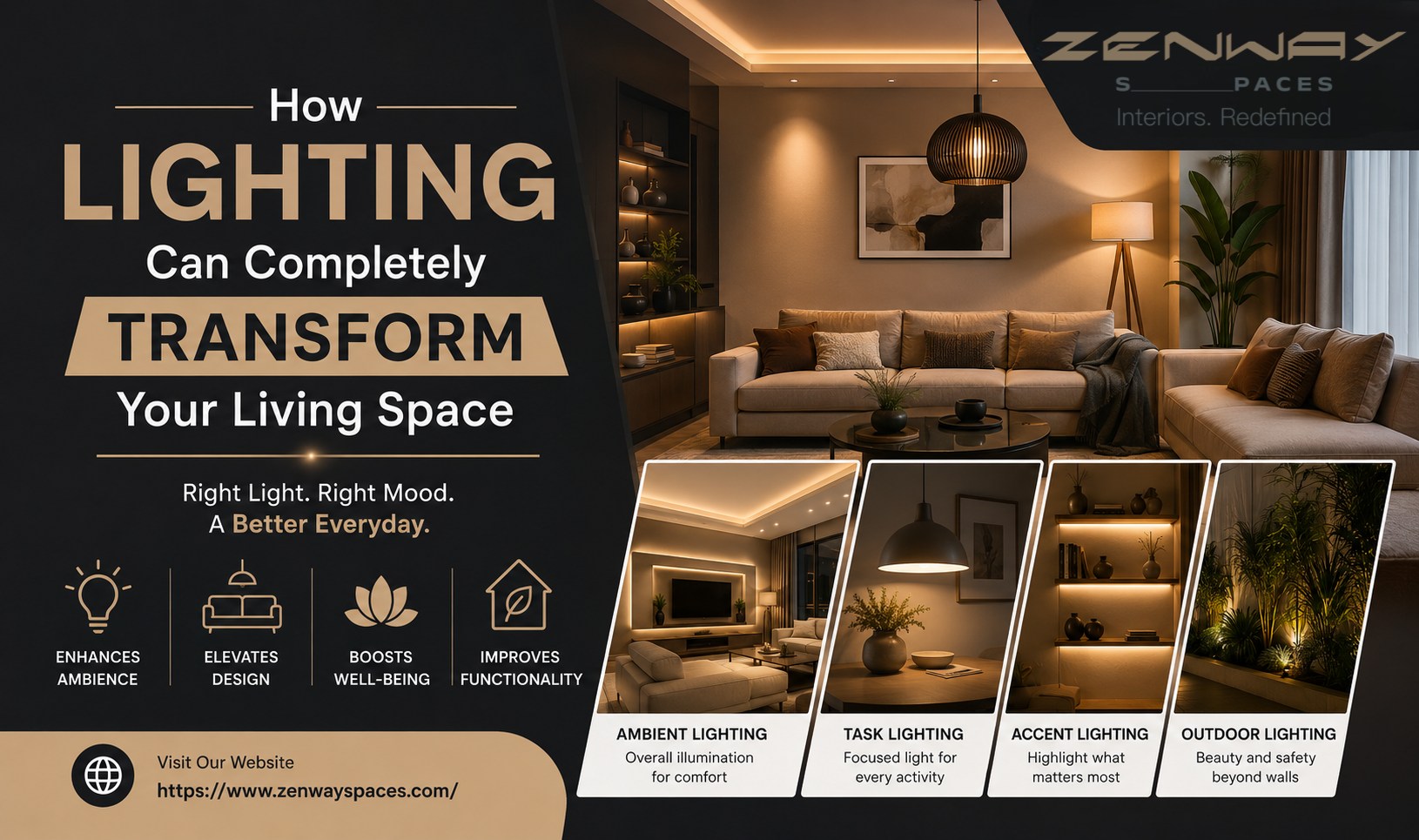
Professional designers generally use three main types of lighting in interior design.
1. Ambient Lighting
Ambient lighting is the main source of light in a room.
It provides overall illumination and helps people move comfortably through the space.
Examples include:
-
Ceiling lights
-
Chandeliers
-
Recessed lights
-
LED panel lights
Ambient lighting forms the foundation of every successful house lighting design.
2. Task Lighting
Task lighting focuses on specific activities.
It provides brighter illumination where detailed work is required.
Examples include:
-
Reading lamps
-
Study table lamps
-
Under-cabinet kitchen lights
-
Vanity lights
Task lighting helps reduce eye strain and improves productivity.
3. Accent Lighting
Accent lighting is used to highlight specific features.
It adds depth, character, and visual interest.
Examples include:
-
Wall washers
-
Spotlights
-
Display cabinet lighting
-
Artwork lighting
Accent lighting is often used to create a luxurious and sophisticated atmosphere.
The Power of Layered Lighting
One of the biggest mistakes homeowners make is relying on a single ceiling light. Modern interior design focuses on layered lighting.
Layered lighting combines:
-
Ambient lighting
-
Task lighting
-
Accent lighting
This approach creates flexibility and allows homeowners to adjust the mood according to different situations.
For example:
A living room can be brightly lit for family gatherings and softly illuminated for movie nights using different lighting layers. This is why layered lighting is considered a key element of successful house lighting design.
Living Room Lighting Ideas
The living room is often the heart of the home.
It is where families gather, guests are welcomed, and memories are made.
To create a balanced lighting scheme:
Use Multiple Light Sources
Instead of one central fixture, combine:
-
Ceiling lights
-
Table lamps
-
Accent lights
Highlight Design Features
Use accent lighting to draw attention to:
-
Artwork
-
Decorative walls
-
Shelves
-
Architectural details
Add Warm Lighting
Warm light creates a welcoming atmosphere and makes the space feel comfortable.
A thoughtfully planned house lighting design can make the living room feel elegant and inviting.
Bedroom Lighting Ideas
Bedrooms should feel calm and relaxing.
The lighting should support rest and comfort rather than create harsh brightness.
Use soft lighting.
Warm white lighting is generally preferred in bedrooms.
Install Bedside Lamps
Bedside lamps provide convenient lighting for reading and relaxation.
Consider Dimmable Lights
Dimmers allow you to control brightness according to your mood and time of day.
The importance of lighting becomes especially clear in bedrooms where comfort is a top priority.
Kitchen Lighting Design Ideas
The kitchen is one of the busiest areas of the home. Good lighting is essential for safety and efficiency.
Add Task Lighting
Install under-cabinet lights to illuminate work surfaces.
Use bright ambient lighting.
General lighting should cover the entire kitchen evenly.
Highlight Kitchen Islands
Pendant lights above kitchen islands add both function and style. A practical house lighting design can make cooking more enjoyable and efficient.
Smart Lighting for Modern Homes
Smart lighting is becoming increasingly popular.
Modern systems allow homeowners to:
-
Control lights remotely
-
Adjust brightness
-
Schedule lighting scenes
-
Save energy
Smart lighting improves convenience while enhancing the overall interior experience.
Common Lighting Mistakes to Avoid
Many homes suffer from poor lighting planning.
Some common mistakes include:
Using Only One Light Source
This creates flat and uninteresting spaces.
Ignoring Task Lighting
Important work areas need focused lighting.
Choosing the Wrong Color Temperature
Incorrect lighting can affect comfort and appearance.
Overlooking Natural Light
Always consider daylight when planning lighting layouts.
Avoiding these mistakes can significantly improve your overall house lighting design.
Why Professional Lighting Design Makes a Difference
Lighting is both an art and a science. Professional designers understand how to balance:
-
Functionality
-
Aesthetics
-
Energy efficiency
-
User comfort
At ZenWay Spaces, every lighting plan is tailored to the unique needs of the homeowner. Our goal is to create interiors that feel calm, elegant, and easy to live in. For homeowners planning a complete interior transformation, explore our Interior Design Services to discover how personalized design solutions can elevate your living experience.
You can also explore our Modular Kitchen Design Solutions for smart, functional, and beautifully lit kitchen spaces.
Final Thoughts
A beautiful home is not just about furniture, colors, or decor. Lighting plays a major role in shaping how every room looks and feels. A carefully planned house lighting design can make your interiors more inviting, functional, and visually appealing. From understanding the importance of lighting to using the right types of lighting in interior design, every decision contributes to creating a better living experience.
Whether you are renovating an existing home or designing a new one, investing in proper lighting is one of the smartest choices you can make. The right lighting does not simply brighten a room. It transforms the way you live in it.
At ZenWay Spaces, we believe every home should reflect comfort, balance, and mindful living. Through thoughtful lighting design, we help homeowners create spaces that truly feel like home.
Frequently Asked Questions (FAQs)
1. Why is house lighting design important?
House lighting design improves functionality, enhances aesthetics, supports daily activities, and creates the right mood in every room. It is one of the most important elements of successful interior design.
2. What are the main types of lighting in interior design?
The three main types of lighting in interior design are ambient lighting, task lighting, and accent lighting. Together, they create a balanced and effective lighting scheme.
3. How can lighting make a room look bigger?
Proper lighting reduces shadows, highlights room features, and creates visual depth, making spaces appear larger and more open.
4. What is the best lighting for a living room?
A combination of ambient, task, and accent lighting is ideal for living rooms. Layered lighting offers flexibility and enhances comfort.
5. How do I choose the right color temperature for my home?
Warm white lighting works best for bedrooms and living rooms, while neutral white is suitable for kitchens and bathrooms. Cool white lighting is ideal for workspaces and study areas.